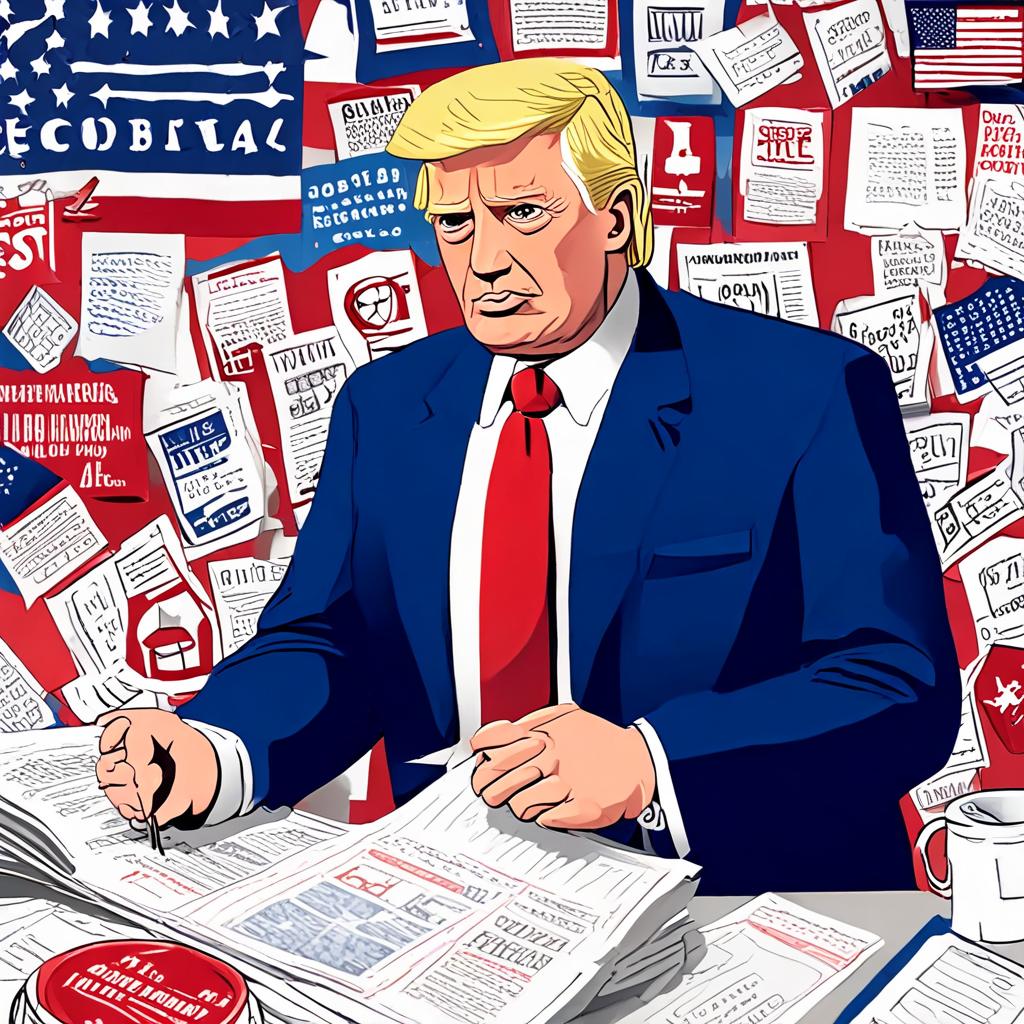
President Donald Trump's unpredictable actions on the global stage, from Greenland to tariffs and Iran, often serve to distract Europe and the world, according to an analysis by Catherine De Vries.
CONTENT:
In an era where attention is a valuable commodity, United States President Donald Trump has mastered the art of capturing it through geopolitical clickbait. Whether it's his sudden interest in acquiring Greenland, imposing tariffs, or threatening Iran, Trump's agenda is to keep Europe and the rest of the world in a constant state of reaction, as Catherine De Vries points out in her commentary for The Guardian.
The president's actions are not driven by a deep-rooted policy or ideology but by a desire for control over the global narrative. Trump understands that in an age of information overload, what is lacking is not data or analysis, but attention. And whoever holds that power, holds the reins of the debate.
De Vries argues that Trump's tactics are not new, but they are particularly effective in today's political climate. By turning geopolitics into a spectacle, Trump ensures that Europe and other world powers are focused on his agenda.
In late January 2026, Trump made headlines when he announced that he would not pursue the acquisition of Greenland after days of threatening to do so. The president's sudden climbdown came as a relief to Denmark and the European Union, but it also highlighted the disconcerting reality that Trump's actions are often driven by a desire for attention, rather than policy detail.
Trump's approach to geopolitics is not based on a thoughtful examination of the facts or a consideration of the long-term implications. Instead, it is a calculated strategy to maintain the spotlight on himself, often at the expense of stable international relations.
De Vries cites Trump's handling of the situation in Venezuela and Iran as further evidence of this pattern. In both cases, Trump's actions created uncertainty and instability, as European powers struggled to respond to his unpredictable moves.
The European Union, for its part, has tried to maintain a steady course in the face of Trump's erratic behavior. But the constant need to react to Trump's latest pronouncements leaves little time for long-term planning and strategic thinking.
As De Vries aptly puts it, "Trump is not a politician who responds to events – he seeks to make them. Not because he is deeply invested in policy detail, but because he understands a defining feature of contemporary politics: attention is power."
In the face of Trump's geopolitical clickbait, Europe and the rest of the world must find a way to maintain focus on their strategic goals, rather than getting distracted by the latest Trump headline.
Sources:
- De Vries, Catherine. (2026, January 28). Trump wants our attention. Let’s stop falling for his geopolitical clickbait. The Guardian. https://www.theguardian.com/commentisfree/2026/jan/28/donald-trump-attention-europe-greenland-venezuela-iran
President Donald Trump's unpredictable actions on the global stage, from Greenland to tariffs and Iran, often serve to distract Europe and the world, according to an analysis by Catherine De Vries.
CONTENT:
In an era where attention is a valuable commodity, United States President Donald Trump has mastered the art of capturing it through geopolitical clickbait. Whether it's his sudden interest in acquiring Greenland, imposing tariffs, or threatening Iran, Trump's agenda is to keep Europe and the rest of the world in a constant state of reaction, as Catherine De Vries points out in her commentary for The Guardian.
The president's actions are not driven by a deep-rooted policy or ideology but by a desire for control over the global narrative. Trump understands that in an age of information overload, what is lacking is not data or analysis, but attention. And whoever holds that power, holds the reins of the debate.
De Vries argues that Trump's tactics are not new, but they are particularly effective in today's political climate. By turning geopolitics into a spectacle, Trump ensures that Europe and other world powers are focused on his agenda.
In late January 2026, Trump made headlines when he announced that he would not pursue the acquisition of Greenland after days of threatening to do so. The president's sudden climbdown came as a relief to Denmark and the European Union, but it also highlighted the disconcerting reality that Trump's actions are often driven by a desire for attention, rather than policy detail.
Trump's approach to geopolitics is not based on a thoughtful examination of the facts or a consideration of the long-term implications. Instead, it is a calculated strategy to maintain the spotlight on himself, often at the expense of stable international relations.
De Vries cites Trump's handling of the situation in Venezuela and Iran as further evidence of this pattern. In both cases, Trump's actions created uncertainty and instability, as European powers struggled to respond to his unpredictable moves.
The European Union, for its part, has tried to maintain a steady course in the face of Trump's erratic behavior. But the constant need to react to Trump's latest pronouncements leaves little time for long-term planning and strategic thinking.
As De Vries aptly puts it, "Trump is not a politician who responds to events – he seeks to make them. Not because he is deeply invested in policy detail, but because he understands a defining feature of contemporary politics: attention is power."
In the face of Trump's geopolitical clickbait, Europe and the rest of the world must find a way to maintain focus on their strategic goals, rather than getting distracted by the latest Trump headline.
Sources:
- De Vries, Catherine. (2026, January 28). Trump wants our attention. Let’s stop falling for his geopolitical clickbait. The Guardian. https://www.theguardian.com/commentisfree/2026/jan/28/donald-trump-attention-europe-greenland-venezuela-iran