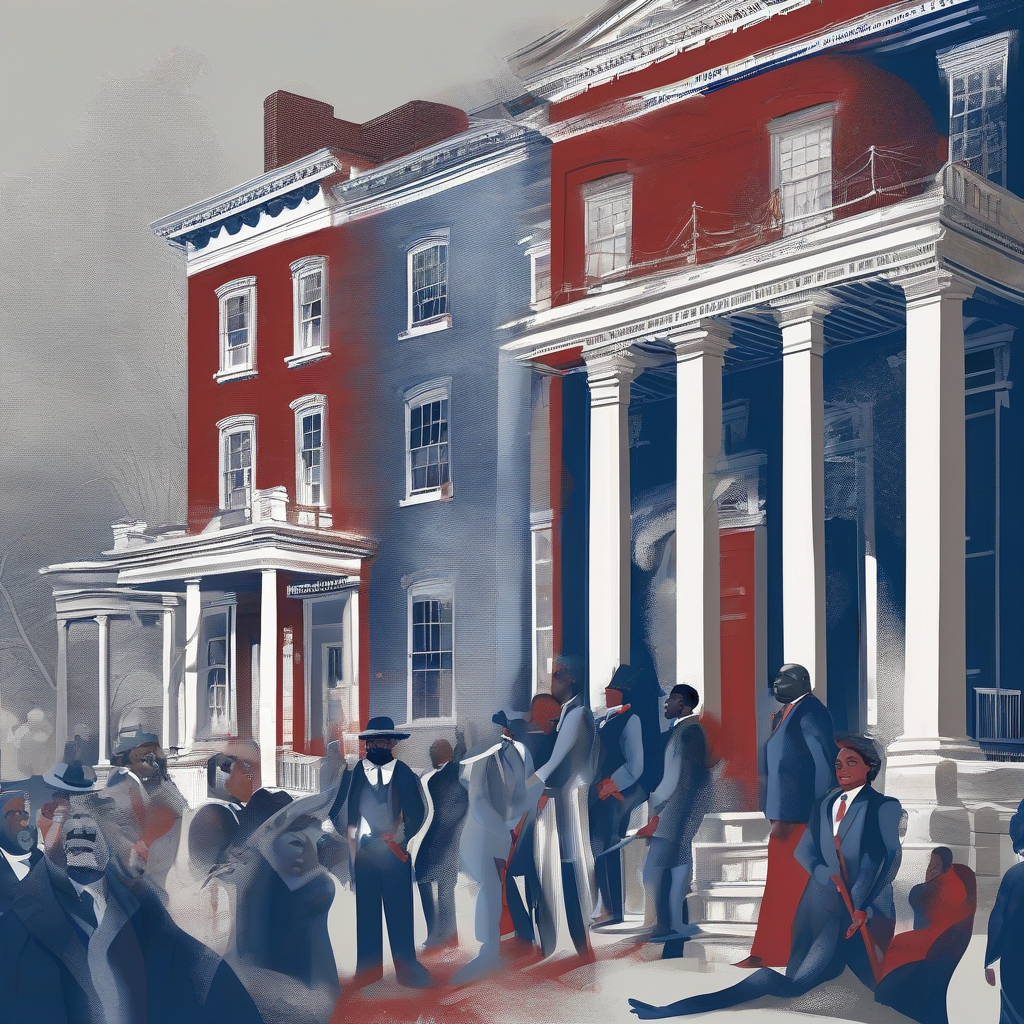
The city of Philadelphia has taken a significant step in its efforts to preserve the historical accuracy of its landmarks by filing a lawsuit against the US government. The lawsuit, filed in federal court, challenges the National Park Service's decision to dismantle a long-established slavery-related exhibit at Independence National Historical Park. The exhibit, which was located at the site of the President's House, the former residence of George Washington, had been in place for years and provided information on the people enslaved by Washington.
The lawsuit, which names the US Department of Interior and its secretary, Doug Burgum, the National Park Service, and its acting director, Jessica Bowron as defendants, seeks a court order requiring the exhibits to be restored while the case proceeds. According to the city, the removal of the exhibit is a clear attempt to erase the history of slavery in the United States and undermine the park's mission to provide an accurate representation of the country's past.
The exhibit in question was installed in 2010 and featured a series of signs and displays that provided information on the people enslaved by Washington at the President's House. The exhibit was designed to provide a more nuanced understanding of Washington's life and legacy, and to acknowledge the significant role that slavery played in the history of the United States.
However, in recent months, the National Park Service has faced criticism for its handling of the exhibit. In January, the agency announced that it would be removing the exhibit as part of a larger effort to "improve the visitor experience" at the park. However, many historians and preservationists have argued that the removal of the exhibit is a clear attempt to downplay the significance of slavery in American history.
The city's lawsuit argues that the removal of the exhibit is a violation of the National Historic Preservation Act, which requires federal agencies to take into account the potential impact of their actions on historic sites and resources. The lawsuit also argues that the removal of the exhibit is a breach of the National Park Service's own policies and guidelines, which emphasize the importance of providing accurate and inclusive interpretations of the country's history.
"This is not just about a single exhibit," said a spokesperson for the city. "This is about the integrity of our historic sites and the accuracy of the information that we provide to the public. We believe that the National Park Service has a responsibility to provide a truthful and nuanced representation of American history, and we will continue to fight to ensure that this responsibility is upheld."
The National Park Service has yet to comment on the lawsuit, but the agency has previously stated that the removal of the exhibit is part of a larger effort to "improve the visitor experience" at the park. However, many historians and preservationists have argued that the removal of the exhibit is a clear attempt to downplay the significance of slavery in American history.
The lawsuit is the latest development in a long-running controversy over the representation of slavery at historic sites across the United States. In recent years, there has been a growing movement to provide more accurate and inclusive interpretations of American history, and to acknowledge the significant role that slavery played in the country's development.
The removal of the exhibit at the President's House site has been widely criticized by historians and preservationists, who argue that it is a clear attempt to erase the history of slavery in the United States. The city's lawsuit is seen as a significant step in the fight to preserve the historical accuracy of the country's landmarks and to ensure that the public is provided with a truthful and nuanced representation of American history.
As the lawsuit proceeds, the city and the National Park Service will likely engage in a heated debate over the representation of slavery at historic sites. However, for many historians and preservationists, the issue is clear: the accurate representation of American history is essential to the country's ongoing conversation about its past and its future.
Sources:
- Philadelphia sues US government for removal of slavery-related exhibit, The Guardian
- Lawsuit filed by the city of Philadelphia against the US Department of Interior and the National Park Service
- National Park Service policies and guidelines on historic preservation and interpretation
The city of Philadelphia has taken a significant step in its efforts to preserve the historical accuracy of its landmarks by filing a lawsuit against the US government. The lawsuit, filed in federal court, challenges the National Park Service's decision to dismantle a long-established slavery-related exhibit at Independence National Historical Park. The exhibit, which was located at the site of the President's House, the former residence of George Washington, had been in place for years and provided information on the people enslaved by Washington.
The lawsuit, which names the US Department of Interior and its secretary, Doug Burgum, the National Park Service, and its acting director, Jessica Bowron as defendants, seeks a court order requiring the exhibits to be restored while the case proceeds. According to the city, the removal of the exhibit is a clear attempt to erase the history of slavery in the United States and undermine the park's mission to provide an accurate representation of the country's past.
The exhibit in question was installed in 2010 and featured a series of signs and displays that provided information on the people enslaved by Washington at the President's House. The exhibit was designed to provide a more nuanced understanding of Washington's life and legacy, and to acknowledge the significant role that slavery played in the history of the United States.
However, in recent months, the National Park Service has faced criticism for its handling of the exhibit. In January, the agency announced that it would be removing the exhibit as part of a larger effort to "improve the visitor experience" at the park. However, many historians and preservationists have argued that the removal of the exhibit is a clear attempt to downplay the significance of slavery in American history.
The city's lawsuit argues that the removal of the exhibit is a violation of the National Historic Preservation Act, which requires federal agencies to take into account the potential impact of their actions on historic sites and resources. The lawsuit also argues that the removal of the exhibit is a breach of the National Park Service's own policies and guidelines, which emphasize the importance of providing accurate and inclusive interpretations of the country's history.
"This is not just about a single exhibit," said a spokesperson for the city. "This is about the integrity of our historic sites and the accuracy of the information that we provide to the public. We believe that the National Park Service has a responsibility to provide a truthful and nuanced representation of American history, and we will continue to fight to ensure that this responsibility is upheld."
The National Park Service has yet to comment on the lawsuit, but the agency has previously stated that the removal of the exhibit is part of a larger effort to "improve the visitor experience" at the park. However, many historians and preservationists have argued that the removal of the exhibit is a clear attempt to downplay the significance of slavery in American history.
The lawsuit is the latest development in a long-running controversy over the representation of slavery at historic sites across the United States. In recent years, there has been a growing movement to provide more accurate and inclusive interpretations of American history, and to acknowledge the significant role that slavery played in the country's development.
The removal of the exhibit at the President's House site has been widely criticized by historians and preservationists, who argue that it is a clear attempt to erase the history of slavery in the United States. The city's lawsuit is seen as a significant step in the fight to preserve the historical accuracy of the country's landmarks and to ensure that the public is provided with a truthful and nuanced representation of American history.
As the lawsuit proceeds, the city and the National Park Service will likely engage in a heated debate over the representation of slavery at historic sites. However, for many historians and preservationists, the issue is clear: the accurate representation of American history is essential to the country's ongoing conversation about its past and its future.
Sources:
- Philadelphia sues US government for removal of slavery-related exhibit, The Guardian
- Lawsuit filed by the city of Philadelphia against the US Department of Interior and the National Park Service
- National Park Service policies and guidelines on historic preservation and interpretation