Skip to article
AI Pulse
Emergent Story mode

Now reading

Overview

1 / 5 3 min 1 sources Single Outlet
Sources

Story mode

AI PulseSingle OutletBlindspot: Single outlet risk

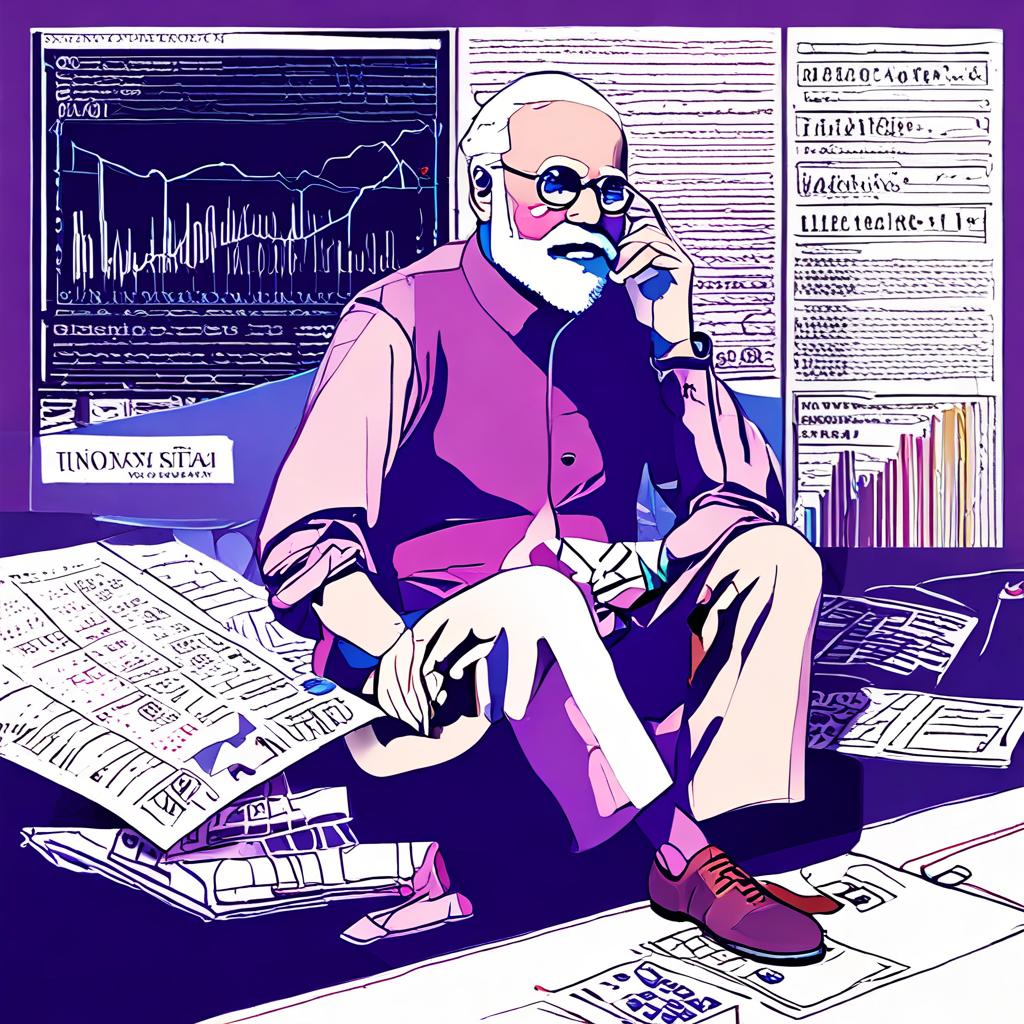
India's Severe Stock Market Slump Amplifies Pressure on Modi to Revitalize Economy

Indian stocks have experienced their worst start to a year in over a decade. The S&P BSE Sensex shed approximately $360 billion in market capitalization during the first three weeks of the year. India's Gross Domestic Product (GDP) growth rate dipping to a six-year low of 4.2% in the quarter ending September 2022.

Read
3 min
Sources
1 source
Domains
1

Indian stocks have experienced their worst start to a year in over a decade, intensifying the need for Prime Minister Narendra Modi's administration to propose effective measures to boost economic growth in the upcoming...

Story state
Structured developing story
Evidence
Evidence mapped
Coverage
0 reporting sections
Next focus
What comes next

Continue in the field

Focused storyNearby context

Open the live map from this story.

Carry this article into the map as a focused origin point, then widen into nearby reporting.

Leave the article stream and continue in live map mode with this story pinned as your origin point.

  • Open the map already centered on this story.
  • See what nearby reporting is clustering around the same geography.
  • Jump back to the article whenever you want the original thread.
Open live map mode

Source bench

Blindspot: Single outlet risk

Single Outlet

1 cited references across 1 linked domains.

References
1
Domains
1

1 cited reference across 1 linked domain. Blindspot watch: Single outlet risk.

  1. Source 1 · bloomberg.com

    India’s $360 Billion Stock Rout Raises Stakes for Modi’s Budget

Open source workbench

Keep reporting

ContradictionsEvent arcNarrative drift

Open the deeper evidence boards.

Take the mobile reel into contradictions, event arcs, narrative drift, and the full source workspace.

  • Scan the cited sources and coverage bench first.
  • Keep a blindspot watch on Single outlet risk.
  • Move from the summary into the full evidence boards.
Open evidence boards

Stay in the reporting trail

Open the evidence boards, source bench, and related analysis.

Jump from the app-style read into the deeper workbench without losing your place in the story.

Open source workbenchBack to AI Pulse
🧠 AI Pulse

India's Severe Stock Market Slump Amplifies Pressure on Modi to Revitalize Economy

Indian stocks have experienced their worst start to a year in over a decade. The S&P BSE Sensex shed approximately $360 billion in market capitalization during the first three weeks of the year. India's Gross Domestic Product (GDP) growth rate dipping to a six-year low of 4.2% in the quarter ending September 2022.

Wednesday, January 28, 2026 • 3 min read • 1 source reference

  • 3 min read
  • 1 source reference

Indian stocks have experienced their worst start to a year in over a decade, intensifying the need for Prime Minister Narendra Modi's administration to propose effective measures to boost economic growth in the upcoming budget.

CONTENT:

Prime Minister Narendra Modi's government faces mounting pressure to revive India's flagging economy following a severe rout in the stock market. According to a report in The Economic Times, Indian stocks are on track for their worst January performance since 2011, with the S&P BSE Sensex shedding approximately $360 billion in market capitalization during the first three weeks of the year.

The dire market conditions come as India grapples with a persistent economic slowdown, with the country's Gross Domestic Product (GDP) growth rate dipping to a six-year low of 4.2% in the quarter ending September 2022. This sluggish economic performance has led to widespread job losses and rising inflation, further fueling public discontent and political unrest.

In response to these challenges, the Modi administration is expected to present a bold and comprehensive budget next month, aimed at spurring economic growth and addressing the concerns of an anxious electorate. Some of the measures being considered include tax incentives for businesses, increased public spending on infrastructure projects, and reforms aimed at attracting foreign investment.

However, the government's ability to implement these measures effectively remains a significant concern for many analysts. India's fiscal deficit, which reached 6.9% of GDP in the financial year ending March 2022, is expected to widen further due to the economic downturn and the ongoing COVID-19 pandemic. This may limit the government's ability to increase public spending and provide significant tax breaks without incurring additional debt.

Moreover, the success of the government's previous initiatives, such as the Goods and Services Tax (GST) reform and the Insolvency and Bankruptcy Code (IBC), has been mixed at best. The implementation of these reforms has been criticized for causing short-term disruptions and failing to deliver the expected long-term benefits.

Despite these challenges, the Modi administration remains committed to addressing the economic malaise and restoring investor confidence. In a recent interview with CNBC-TV18, Finance Minister Nirmala Sitharaman expressed her optimism about the future of the Indian economy, stating that the government was taking steps to "rekindle the animal spirits of entrepreneurship and investment."

To achieve this goal, the budget is expected to focus on measures that can stimulate private sector investment, create jobs, and boost consumer demand. Some of the initiatives being considered include the creation of a production-linked incentive (PLI) scheme for select industries, the expansion of the Atmanirbhar Bharat Abhiyan (Self-Reliant India Mission), and the continuation of various pro-farmer initiatives.

However, the success of these measures will depend on their implementation and the government's ability to address the underlying structural issues plaguing the Indian economy. As the economic downturn continues, the pressure on the Modi administration to deliver results will only intensify, making the upcoming budget a critical test of its ability to steer the country back onto the path of growth.

Sources:

Indian stocks have experienced their worst start to a year in over a decade, intensifying the need for Prime Minister Narendra Modi's administration to propose effective measures to boost economic growth in the upcoming budget.

CONTENT:

Prime Minister Narendra Modi's government faces mounting pressure to revive India's flagging economy following a severe rout in the stock market. According to a report in The Economic Times, Indian stocks are on track for their worst January performance since 2011, with the S&P BSE Sensex shedding approximately $360 billion in market capitalization during the first three weeks of the year.

The dire market conditions come as India grapples with a persistent economic slowdown, with the country's Gross Domestic Product (GDP) growth rate dipping to a six-year low of 4.2% in the quarter ending September 2022. This sluggish economic performance has led to widespread job losses and rising inflation, further fueling public discontent and political unrest.

In response to these challenges, the Modi administration is expected to present a bold and comprehensive budget next month, aimed at spurring economic growth and addressing the concerns of an anxious electorate. Some of the measures being considered include tax incentives for businesses, increased public spending on infrastructure projects, and reforms aimed at attracting foreign investment.

However, the government's ability to implement these measures effectively remains a significant concern for many analysts. India's fiscal deficit, which reached 6.9% of GDP in the financial year ending March 2022, is expected to widen further due to the economic downturn and the ongoing COVID-19 pandemic. This may limit the government's ability to increase public spending and provide significant tax breaks without incurring additional debt.

Moreover, the success of the government's previous initiatives, such as the Goods and Services Tax (GST) reform and the Insolvency and Bankruptcy Code (IBC), has been mixed at best. The implementation of these reforms has been criticized for causing short-term disruptions and failing to deliver the expected long-term benefits.

Despite these challenges, the Modi administration remains committed to addressing the economic malaise and restoring investor confidence. In a recent interview with CNBC-TV18, Finance Minister Nirmala Sitharaman expressed her optimism about the future of the Indian economy, stating that the government was taking steps to "rekindle the animal spirits of entrepreneurship and investment."

To achieve this goal, the budget is expected to focus on measures that can stimulate private sector investment, create jobs, and boost consumer demand. Some of the initiatives being considered include the creation of a production-linked incentive (PLI) scheme for select industries, the expansion of the Atmanirbhar Bharat Abhiyan (Self-Reliant India Mission), and the continuation of various pro-farmer initiatives.

However, the success of these measures will depend on their implementation and the government's ability to address the underlying structural issues plaguing the Indian economy. As the economic downturn continues, the pressure on the Modi administration to deliver results will only intensify, making the upcoming budget a critical test of its ability to steer the country back onto the path of growth.

Sources:

Coverage tools

Sources, context, and related analysis

Visual reasoning

How this briefing, its evidence bench, and the next verification path fit together

A server-rendered QWIKR board that keeps the article legible while showing the logic of the current read, the attached source bench, and the next high-value reporting move.

Cited sources

1

Reasoning nodes

4

Routed paths

3

Next checks

1

Reasoning map

From briefing to evidence to next verification move

SSR · qwikr-flow

Story geography

Where this reporting sits on the map

Use the map-native view to understand what is happening near this story and what adjacent reporting is clustering around the same geography.

Geo context
0.00° N · 0.00° E Mapped story

This story is geotagged, but the nearby reporting bench is still warming up.

Continue in live map mode

Coverage at a Glance

1 source

Compare coverage, inspect perspective spread, and open primary references side by side.

Linked Sources

1

Distinct Outlets

1

Viewpoint Center

Lean Left

Outlet Diversity

Very Narrow
1 source with viewpoint mapping 1 higher-credibility source
Coverage is still narrow. Treat this as an early map and cross-check additional primary reporting.

Coverage Gaps to Watch

  • Single-outlet dependency

    Coverage currently traces back to one domain. Add independent outlets before drawing firm conclusions.

Read Across More Angles

Source-by-Source View

Search by outlet or domain, then filter by credibility, viewpoint mapping, or the most-cited lane.

Showing 1 of 1 cited sources with links.

Left / Lean Left (1)

Bloomberg

India’s $360 Billion Stock Rout Raises Stakes for Modi’s Budget

Open

bloomberg.com · Jan 28, 2026

Lean Left High Dossier
Fact-checked Real-time synthesis Bias-reduced

This article was synthesized by Fulqrum AI from 1 trusted sources, combining multiple perspectives into a comprehensive summary. All source references are listed below.